


Complex Care at Home in Kent: Nurse-Led Support for Serious Health Needs
When a health condition needs clinical care, not just help around the house, the default used to be a hospital ward or a specialist unit. It no longer has to be. Complex care brings trained, nurse-supervised clinical support into the home, so adults and children with serious or long-term conditions can live where they are most comfortable. We deliver it across Kent under full clinical oversight.
When Does Care Become Complex Care?
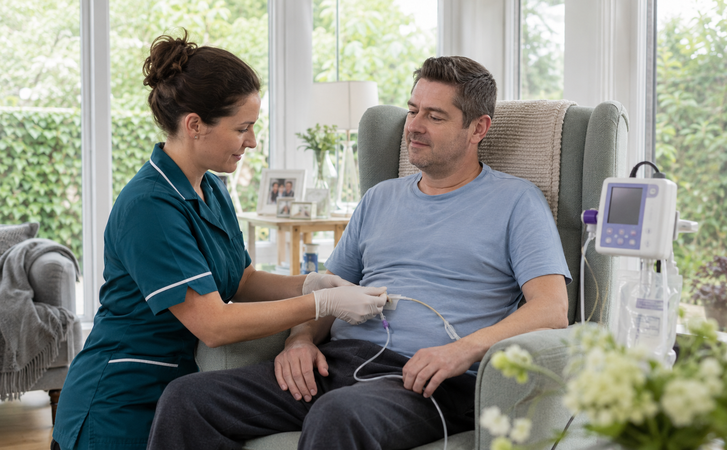
Standard home care covers daily living: washing, dressing, meals, company. Complex care begins where a condition needs clinical procedures and clinical judgement to keep someone safe at home. Think tube feeding, seizure response, a tracheostomy, or managing several conditions at once.
Because the stakes are higher, the structure behind the care is different. A registered nurse builds the plan, trains the carers for that specific person, and stays involved. This is what people mean when they say nurse-led.
Conditions We Support at Home
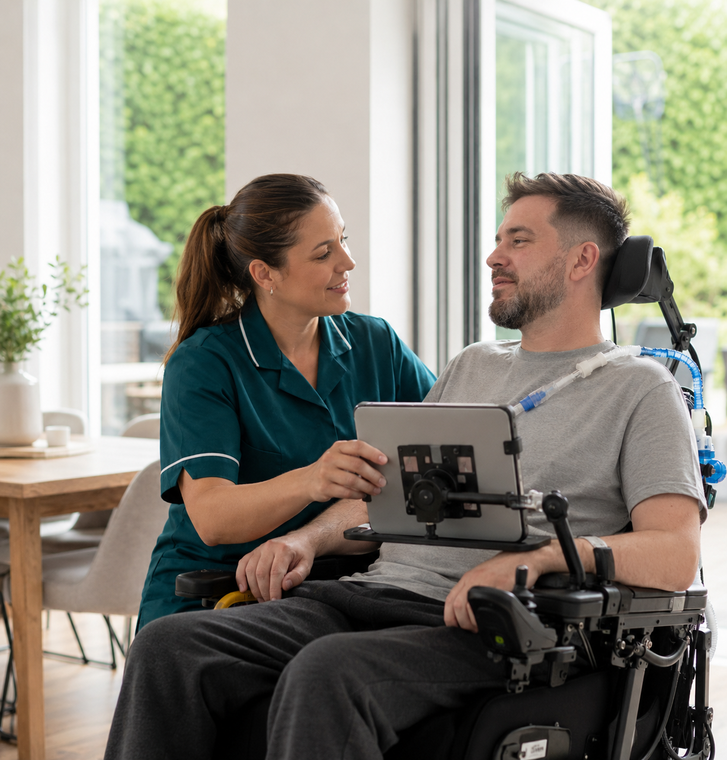
We support a wide range of conditions. If something is not listed here, it is still worth asking, because we can often help.
Neurological: epilepsy, cerebral palsy, acquired brain injury, spinal cord injury, multiple sclerosis, motor neurone disease, Parkinson’s, muscular dystrophy.
Cognitive and degenerative: dementia, Alzheimer’s, learning disabilities.
Respiratory: tracheostomy, ventilator-dependent conditions, chronic lung disease.
Genetic and congenital: genetic syndromes, chromosomal conditions, congenital heart defects.
Other: diabetes, cancer, stroke recovery, bariatric needs, palliative and end-of-life care, post-operative recovery.
The Clinical Support Our Carers Provide
PEG and Tube Feeding
Support with gastrostomy (PEG) and jejunostomy (JEJ) feeding, including feed administration, site care, troubleshooting and nutritional monitoring, all within a plan set by the clinical team.
Tracheostomy and Ventilator Support
BiPAP, CPAP and invasive ventilator support, and tracheostomy care including suctioning and tube changes under clinical protocol, with emergency airway management.
Epilepsy and Seizure Management
Carers trained in seizure recognition, rescue medication such as buccal midazolam where prescribed, accurate seizure logging, and the agreed emergency protocol, so the right thing happens calmly and fast.
Stoma, Catheter and Continence Care
Colostomy, ileostomy and urostomy management, plus suprapubic and urethral catheter care, with close attention to infection control and skin integrity.
How Our Nurse-Led Model Works
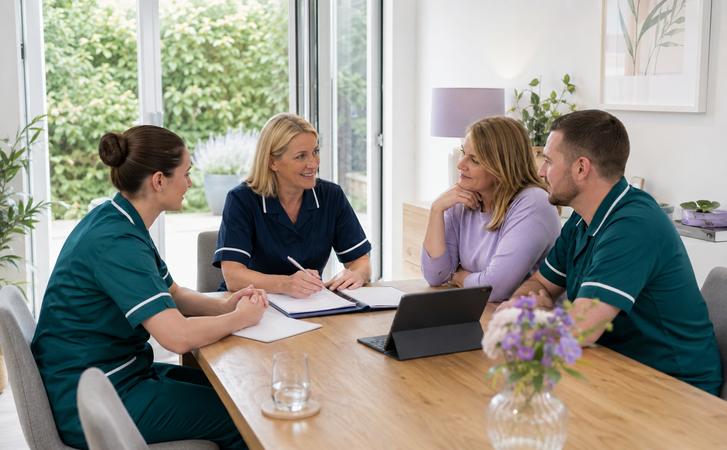
A registered nurse leads every step: assessing needs, writing the care plan, and training each carer for that client’s specific procedures. Carers are competency-signed off before they deliver any clinical task, and the plan is reviewed and audited regularly. We work alongside GPs, district nurses, consultants and therapy teams, and you can meet our clinical team to see who stands behind your care.

Complex Care for Children and Young People
Children's complex care is a distinct skill, and we treat it that way. Paediatric packages are overseen with children's needs front of mind, so a child can be at home, at school, and part of family life.
Support for technology-dependent children using ventilators, feeding tubes and monitoring equipment.
Care that enables school attendance, social activities and ordinary family routines.
Transition planning from children's to adult services across the 14 to 25 age range.
Joint working with paediatric consultants, therapists and education providers.
An enhanced safeguarding framework with paediatric-specific protocols.

Why Care at Home Beats a Hospital or Residential Setting
One-to-one care focused entirely on the individual.
Familiar surroundings, family, pets and routine, which tend to support better wellbeing.
Lower infection risk than a hospital or shared residential setting.
Continuity of carer, which builds trust and clinical consistency.
Couples and families can stay together rather than be separated by a placement.
How Complex Care Is Funded in Kent
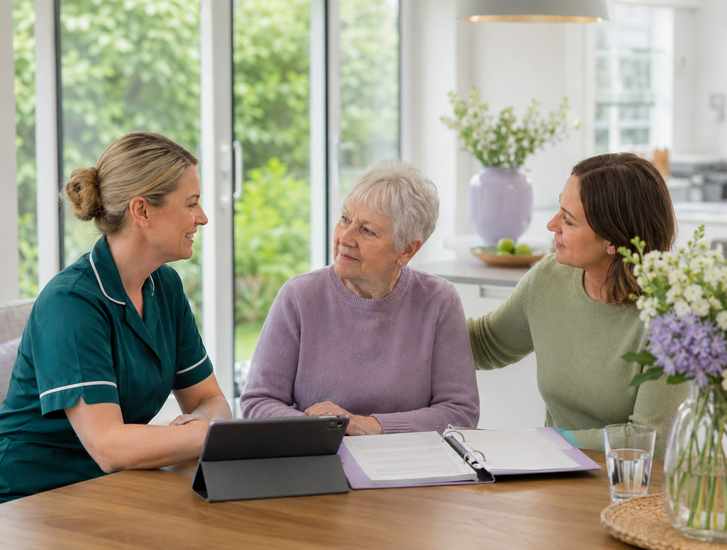
Complex care is often funded through the NHS rather than paid for privately. NHS Continuing Healthcare may cover the full cost for those with a primary health need, assessed using the Decision Support Tool. Care can also be jointly funded by the NHS and local authority, or supported through Kent County Council, personal health budgets and direct payments.
We work with commissioners and case managers to make funding transitions as smooth as possible, and we can guide families through where to start.
Starting Complex Care, Step by Step
Referral or enquiry
A family, GP, hospital team or case manager gets in touch.
Tailored care plan
We write a detailed clinical plan with the people involved in the person’s care.
Care begins, with ongoing oversight
A nurse stays involved through reviews, audits and on-call support.
Clinical assessment
A nurse assesses needs at home or on the ward.
Carer recruitment and training
Carers are matched and trained for the specific procedures, then signed off.
Areas We Cover Across Kent
We deliver complex care across Cranbrook, Sissinghurst, Goudhurst, Tenterden, Hawkhurst, Maidstone, Staplehurst and Tunbridge Wells, and the wider Weald of Kent. Where ongoing presence is needed, complex support can be combined with 24-hour live-in care. Check the areas we cover across Kent.
Refer or Enquire About Complex Care in Kent
Whether you are a family looking for a way home from hospital, or a professional arranging a package, the first conversation is simple and carries no obligation.
Frequently Asked Questions
-
Standard home care helps with daily living such as washing, dressing and meals. Complex care adds clinical procedures and clinical oversight, for example tube feeding, seizure management or ventilator support, planned and supervised by a registered nurse.
-
Conditions include epilepsy, cerebral palsy, acquired brain injury, multiple sclerosis, motor neurone disease, ventilator-dependence, tracheostomy needs, and many others. If a condition is not listed, contact us, because we can often still help.
-
Yes. We provide paediatric complex care at home, including for technology-dependent children, with a safeguarding framework built for children and joint working with paediatric teams and schools.
-
Carers receive tailored training matched to the client's specific clinical needs and are competency-signed off by a registered nurse before delivering any procedure. Training and competencies are reviewed regularly.
-
Complex care is often funded by the NHS through Continuing Healthcare for those with a primary health need, or jointly funded with the local authority. Personal health budgets, direct payments and Kent County Council funding may also apply. We help families and professionals navigate this.
-
Yes. We can assess on the ward and put a package in place to support a safe, timely discharge, working with the hospital team and any case manager involved.
-
Yes. We work routinely with NHS commissioners, case managers and local-authority teams, and we manage funding transitions so the care itself is never interrupted.